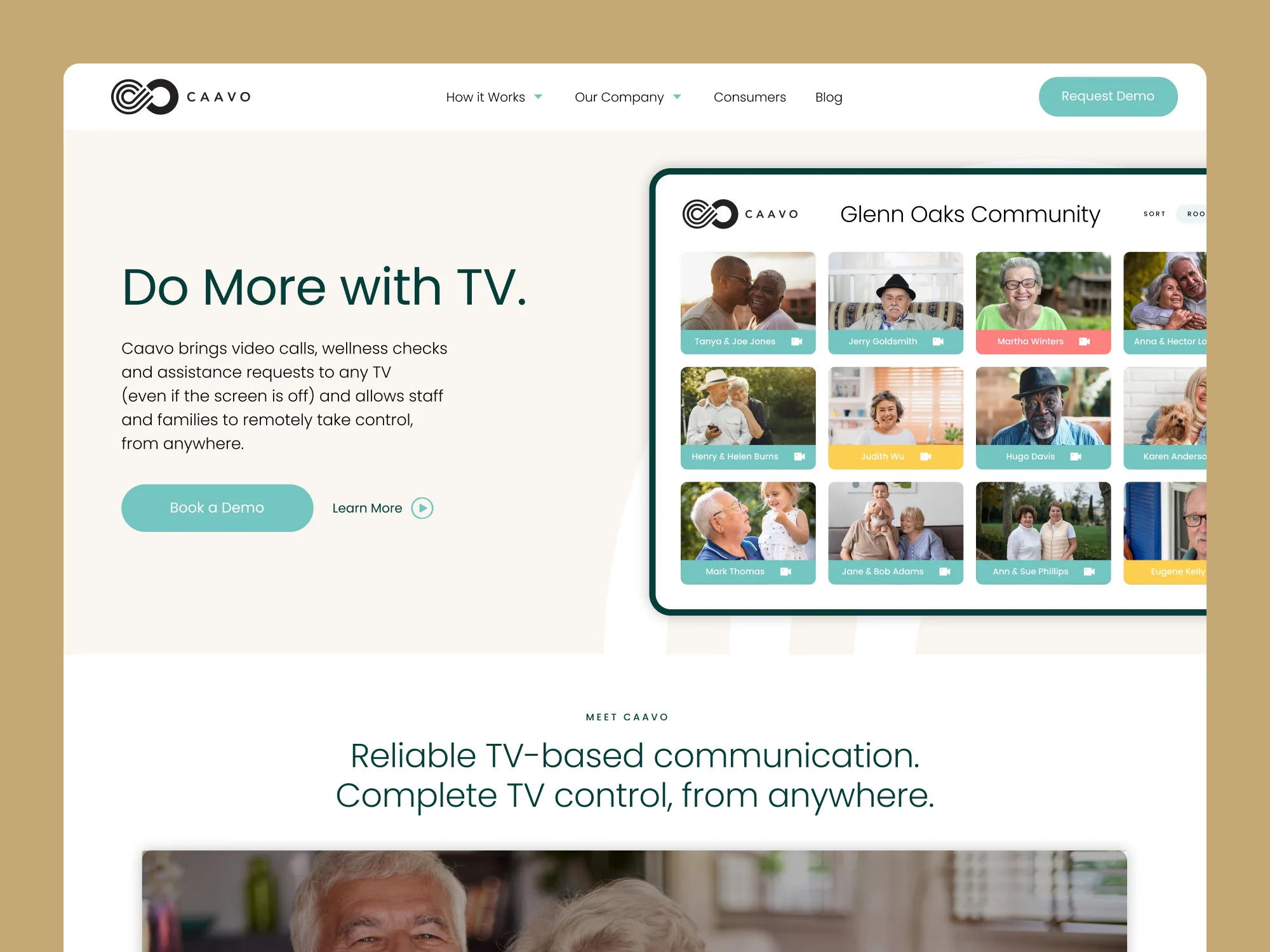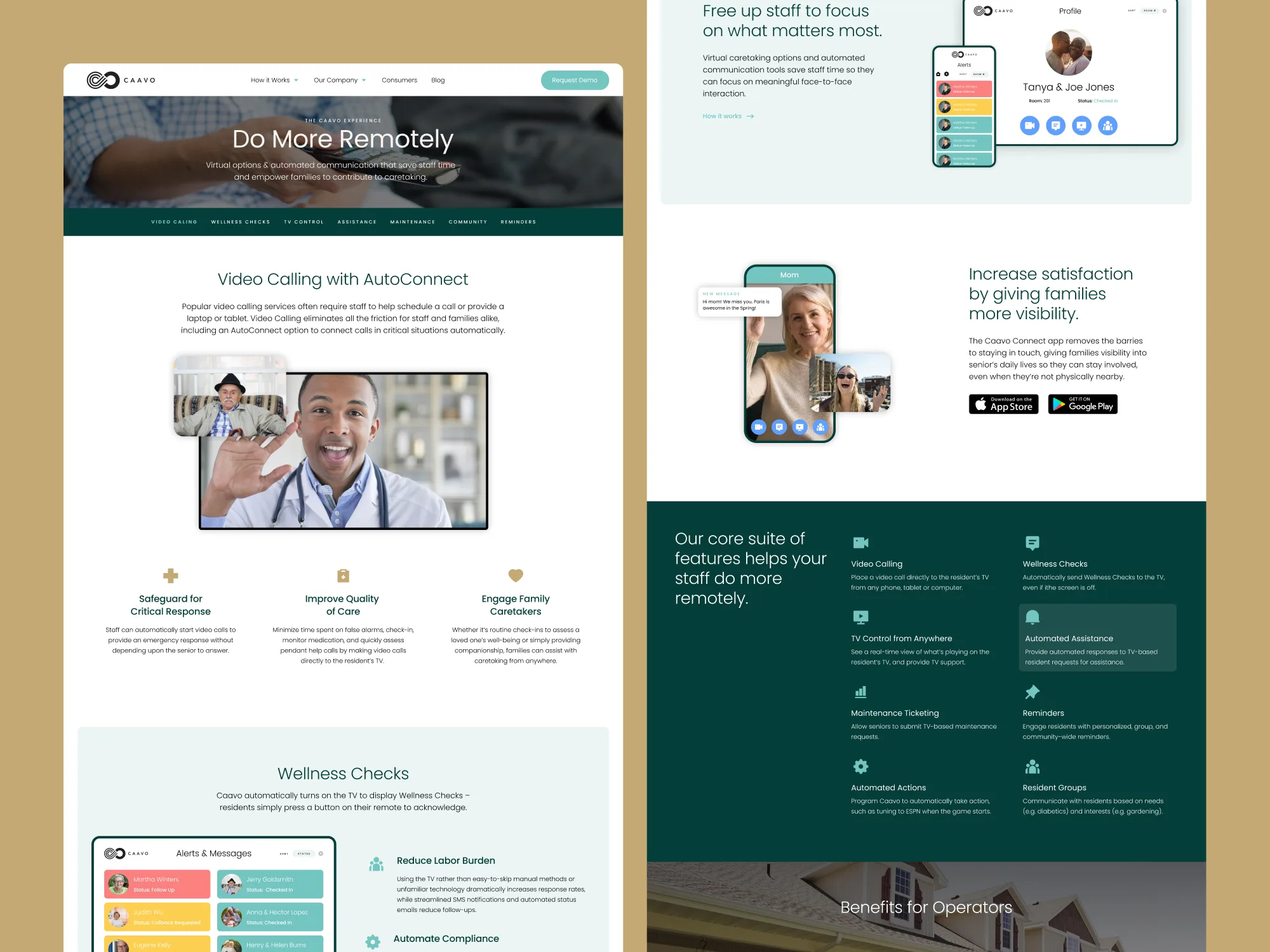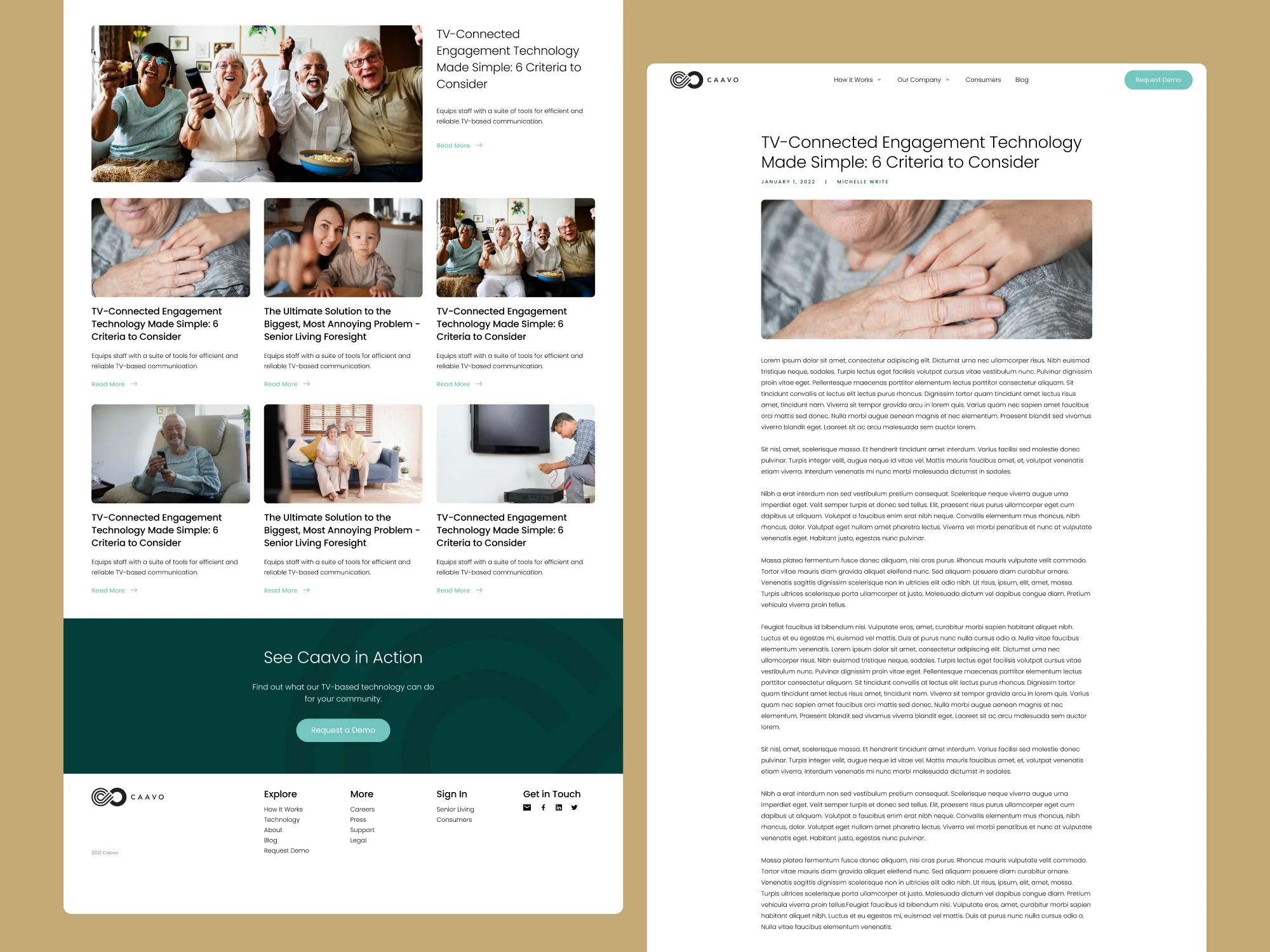
Caavo is a TV-based communication and care platform for senior living communities — video calls, wellness checks and assistance requests delivered to any television in a resident's room, controllable remotely by staff and family. I designed the brand identity, the sales narrative and the marketing site. I did not design the product itself.
The problem was that two audiences wanted opposite things. The buyer is a senior living operator weighing vendor risk, staffing costs and occupancy. The user is an eighty-five-year-old resident. The person judging it emotionally is that resident's adult child. Clinical brands reassure the operator and unsettle the family; warm brands reassure the family and get filtered out of procurement.
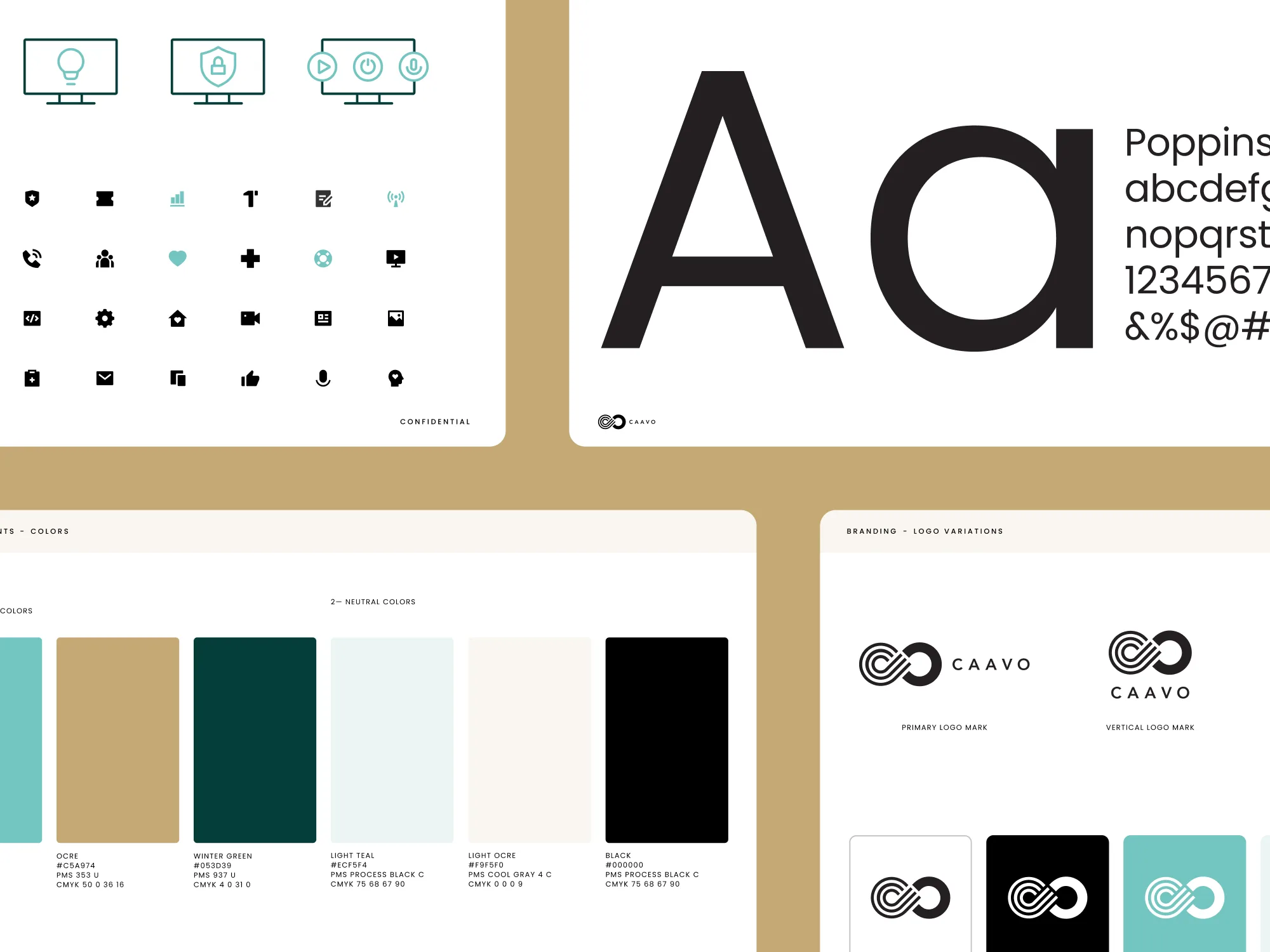
So the system carries both registers rather than averaging them into something neutral. Deep green and ocre do the institutional work — the colours that let a facility director present this to a board. Teal and the photography do the human work, deliberately unclinical: residents laughing, families on video calls, never a stock hospital corridor. And the typography solves a literal constraint, because the primary display is a television seen from across a room by someone whose eyesight isn't what it was. Legibility at distance wasn't a preference; it shaped the whole system.
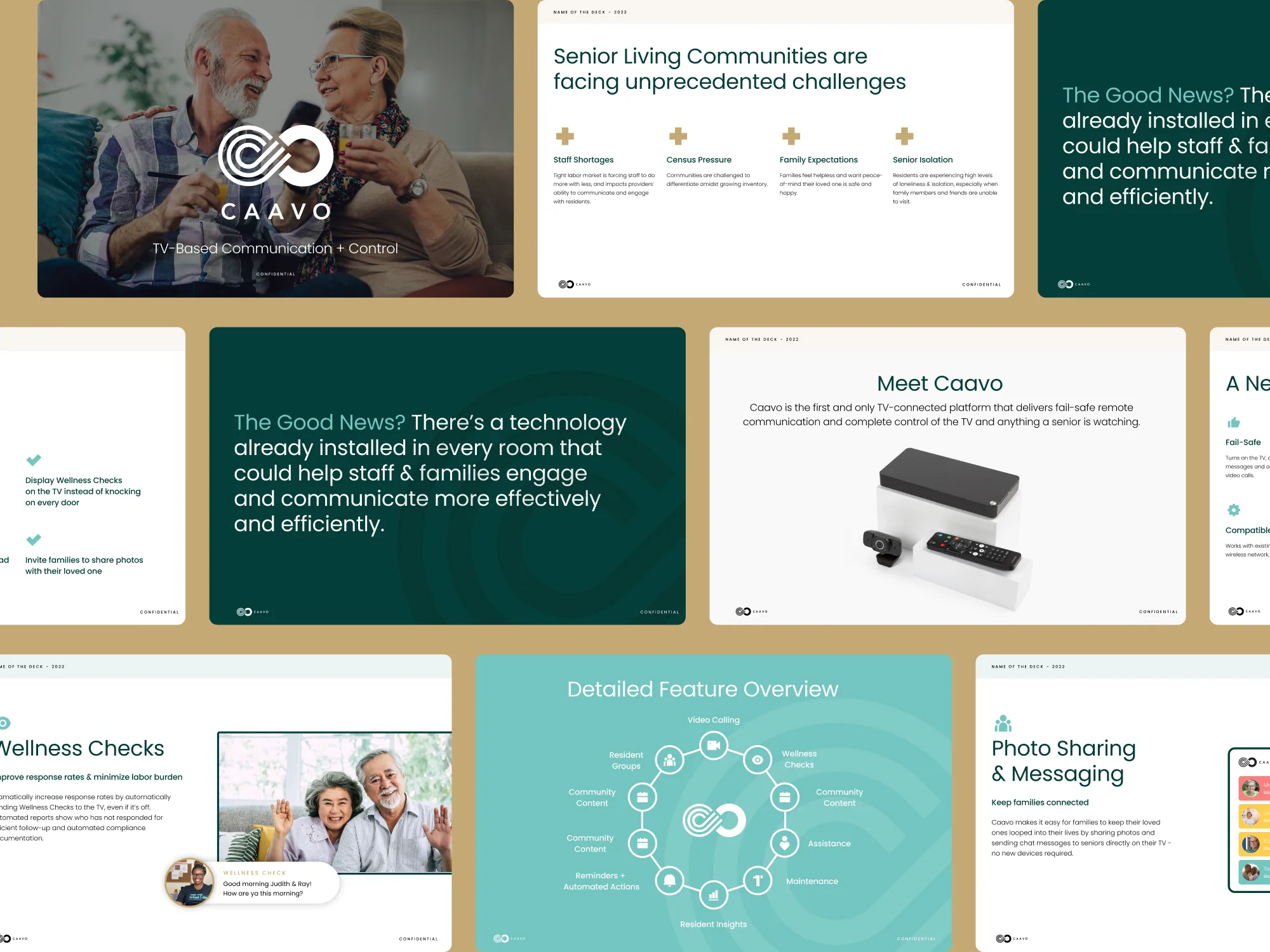
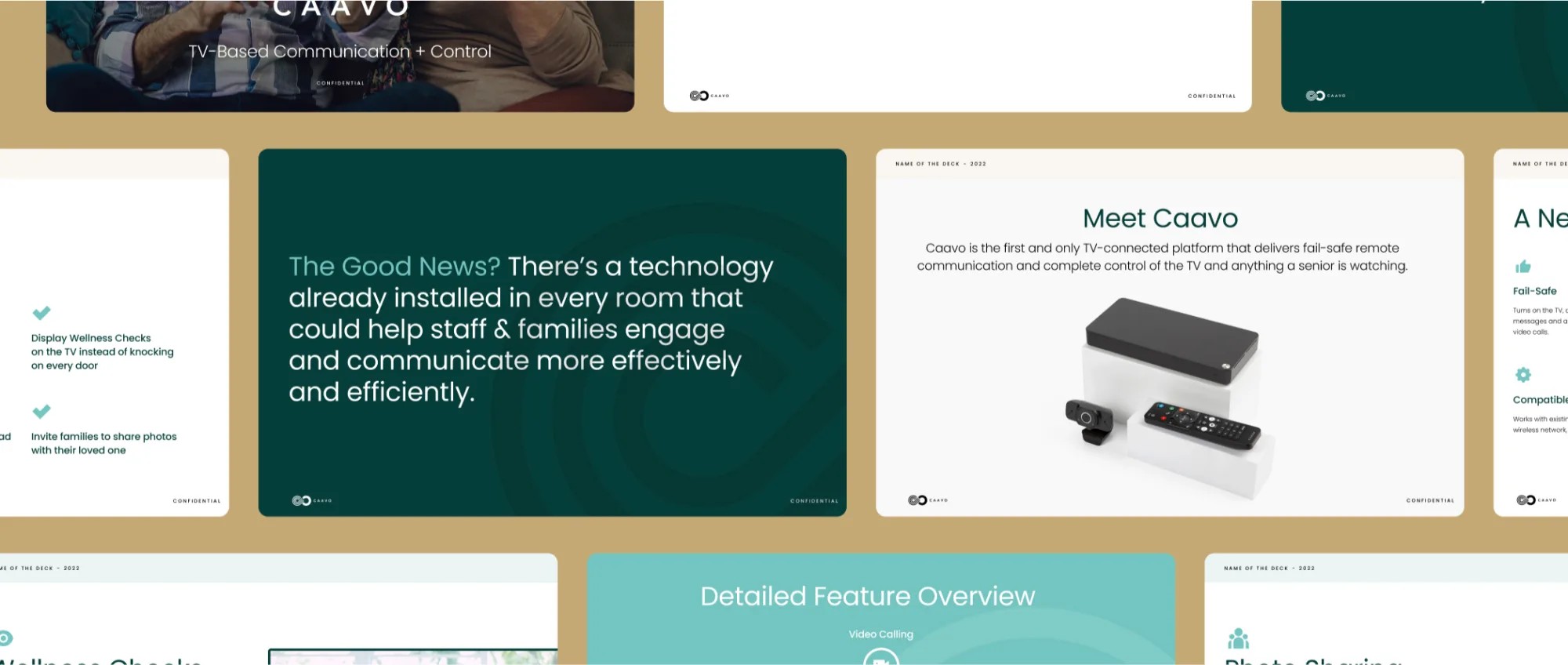
The sales deck was the most important artifact. It opens on the operator's agenda rather than the product — staff shortages, census pressure, family expectations, resident isolation — and then makes the move the company rests on: there is already a technology installed in every room. Every competitor has to answer what installation costs across an entire facility, and whether residents in their eighties will learn a new device. Caavo's answer is that there is nothing to install and nothing to learn. The narrative doesn't argue against those objections; it arranges the story so they never arise.
The feature architecture is laid out as a system diagram because the deck has a second life — the facility director who sees the demo has to sell it internally, without us in the room.
The company was acquired and continues to operate under new ownership.